I absolutely loathe WSL at work. Users with local non-AD connected systems (which bypass GPOs) install it, then start making highly insecure configurations that result in PII nightmares.
It’s a goddamned cancer riddled bastard child of Linux and Windows that needs the Ol’ Yeller treatment.
I’m guilty of using WSL to bypass what the IT department has done, but that’s partly due to our IT department being borderline useless. To prove my point to them one time, I took a project and compiled it in Windows normally, in a fresh Windows VM, and in WSL. A 20 second compile in WSL took 2 minutes on the Windows host.
Windows is only 6x slower in your environment?
Consider yourself lucky.
There are times when my computer just stops, entirely, for like 15 seconds at a time. Didn’t ask it to do much…just open Teams.
And I know it’s 15 seconds because I have seconds enabled in my clock and it actually stops ticking.
But I’m dailying an Ubuntu laptop at work now, and legit everything is faster. I mean like every day stuff like launching apps and switching windows and browsing webpages. Just an overall far more productive system.
All those delays add up. Especially when mated with an ADHD-riddled admin like me who gets distracted and either moves into another task because Word is taking too long to open (excess context switching makes me anxious…but so does waiting for shit like word to open)…or start investigating it.
Which is a whole other pain point in itself because shit like launching Event Viewer takes a solid 2 minutes. RSOP takes like 10 minutes to compile.
It used to take ADUC 5 minutes to load before I found out that was DNS. Yeah, that was actually DNS.
Didn’t ask it to do much…just open Teams.
You asked Cancer to give you Herpes…
I hate that the fastest thing our new work PCs do is load teams. Every fucking thing else was faster on the old thin clients.
Christ I hate the modern enterprise stack
The cognitive friction of a slow PC is like sandpaper to my brain
similar but lesser case at work… I was given some 50 K records to analyze, I needed to perform some matches and the records came in flat csv files
I was told by IT that excel was my only option… after 4 hours of it crashing I gave up and did it all on WSL CLI commads, it took less than 45 seconds to execute
I installed WSL out of spite to show that my program compiled way faster when the AV didn’t know about it. It went from 18 minutes to about 6.
I’m sure you can find better examples… Not only is a small time window, it also seems to me is more to do with tooling on each environment than your actual IT.
Oh I can think of many examples. That was just the latest one.
There was also the time that IT decided that industrial controls technicians didn’t need the ability to manually set IP addresses, or the time where they managed to have %Documents% point to a network share, while they were simultaneously trying to sort out wifi coverage issues.
“If you didn’t want me running nmap scans on the corporate network, you shouldn’t have let my account use the network interface”
I don’t have admin rights at work so can’t install WSL.
But for whatever reason, Virtualbox is something I’m allowed to install. So I did. Now I just use Debian for everything via Virtualbox, IT dept be damned
My work would be impossible without WSL, and yes I am guilty of hiding from the security systems… Because the security systems are so invasive they keep locking files I’m trying to open so IDEs don’t even work properly under Windows.
Dang. WSL is literally the only thing that maintains my sanity when I am forced to do anything on Windows. I don’t work in an enterprise environment, mind you.
only thing
Cygwin?
That was the shit for a long time, but it doesn’t give you Linux containers.
Huh. That’s still around?
Users with local non-AD connected systems (which bypass GPOs)
Found your problem. Nothing to do with Linux/WSL.
Windows
thatneeds the Ol’ Yeller treatment.FTFY
Ok so you can provide your users with an option to use a sane OS then.
Ubuntu has dropped off a cliff in Linux market share. Fedora serves as a near-replacement in UX, and there are some distros that are so optimized as “pre-configured”, they left it in the dust, to say nothing of how Canonical keeps trying to make Ubuntu worse. It used to be famously “Debian but easy”, but now just using Debian sounds like way less of a hassle.
I remember on Reddit once some guy was talking about how he installed Ubuntu and it only had a terminal no GUI and it didn’t have APT only Snap. Took me a minute but I figured out he had installed Ubuntu Core or whatever they call their embedded system.
And given Canonical’s corporate garbage fire website I can see how. I kinda hate the brand names they all independently come up with. Fedora isn’t much better, the way you learn Fedora Silverblue is the immutable version that comes with the Gnome desktop is you ask on Reddit, because their website is 94% marketing drivel.
Don’t look at the Debian website.
Ubuntu is “Debian your boss will agree to”. That’s it.
I like Ubuntu on my laptop. I need a new desktop because I can only support Debain and Debian is barebones.
I stupidly love Ubuntu because to me it’s still Debain but easy.
Debian is chill and all but I love the user interface and ease of access with Ubuntu.
I don’t know what a native Linux PC is. Does that mean is runs the OS without a noticeable accent?
Real answer: this is talking about computers with windows 11 installed that also run Ubuntu through a service called WSL, or Windows Subsystem for Linux; basically you have a windows 11 pc that can do linux stuff too.
A native Ubuntu machine would be installed directly to the hard drive and booted that way.
Makes sense, thanks. Also seemingly an odd brag. Seems like putting out an article that you’re commonly the side piece.
Yeah. I highly suspect its mostly people who need Ubuntu for job purposes and have security policies or just the C-suite refusing to follow the times
I wouldn’t call WSL service, Linux environment integrated into Windows is more accurate. With WSL 2, Linux actually runs using a lightweight virtual machine with a real Linux kernel, while still being tightly integrated with Windows. It’s a proper Ubuntu (or whatever you want really) installation that you can run a production server off of.
Native Linux PCs speak in penguinese and celebrate their mesiah the great Torvaldius giver of kernels.
I’ve heard rumors he turned to the dark side.
Funnily enough, Microsoft built WSL so developers could use Linux without leaving Windows. Instead, it turned a growing number of Windows PCs into functional Linux development machines, with Windows serving as little more than the launcher.
Does this suggest that more Ubuntu users are developers than typical non-technical people (or that they’re about to be)? We need to pump up those numbers on average peoples’ computers
My guess is not just traditional developers, but anyone doing any amount of coding, like data scientists, business analysts, etc.
Especially if they’re using AI, those tools work better on Linux, or as is the case most places, wsl2 inside Windows.
I believe Windows is kept because of the Office tools. However, Windows needs 12 layers of security tools that constantly get in your way, so the path of least resistance is to just stay in your wsl2 sandbox.
The knee jerk reaction to this from enterprise IT is often to restrict access to WSL. This solves the problem, but creates disgruntled users who will continue to try and work around it.
What they should consider, in my opinion, is giving these people real Linux workstations that can be enrolled in group policies, SSO, and all that good stuff. Commercial vendors of Linux will support these use cases.
Some places roll out Macs, which work almost as well, but the hardware is more expensive. Hardware and commercial software support may be better, though, I don’t know.
I think either is a superior alternative to Windows.
Unfortunately most people are intimidated and wary of Linux because “some of my programs might not work”
Average people aren’t going to learn a new system because the whole “devil you know” thing.
Simply, the majority of people would rather stick with MS than install a new OS.
If containers, VMs, and dual-boot are banned in the workspace I kinda feel the fear of things not work is legit. When I’m forced to code on a Windows computer without WSL at university’s Programming course in electrical engineering department. Everything I’m used to, bash, cat, cd, ls, nvim, sed, grep, …, simply don’t exist. And I end up find it easier to code in the small text box of the site they provide than any of the slow, non-Vim mode, IDEs.
Firstly, I use linux for self hosting, and have a love-hate relationship for any other purpose. I’ve been trying to make the full transition since about 2009(?) and always end up back on the spyware-riddled Microswamp ad-delivery system.
I’m going to get downvoted for saying this, but if Linux could make hardware tasks as easy as Microsoft, namely printing, Windows would be a thing of the past.
I could put Mint on my 72 y.o.mom’s computer and she probably wouldn’t notice the difference until she had to do something dealing with hardware (connect a camera, or god forbid, print something). inb4 just use cups - My mom doesn’t gasf about dependencies, chown, and chasing terminal errors for 6 hours to print an agenda for the ladies’ church meeting and then have it break itself the next day. This is why it fails. Linux purists who don’t care that people don’t have time for CLI will disagree, and that is precisely what keeps things in the current state.
Obviously I don’t know your setup, but Linux is far easier for printing in most cases. The drivers are built in, and just work. No third party driver packages full of spyware and ink ads necessary.
Hardware support, in general, has always been a struggle for Linux, but in the last few years, two things have happened to tip the scale:
- Technology kinda stopped advancing. Products are, more often then not, a rehash of last years model with no major changes. This means if Linux gets support for last year’s device, it’ll probably work with this years with minor to no changes.
- Growing Linux popularity has increased the profile enough that companies are at least trying a little to support Linux, even if it is mostly just making sure Linux developers have documentation on the device.
- And secret number 3, the tools and systems for reverse engineering USB devices have gotten better and more understood.
Those are good points, and accurate. I think my luck may just suck. I would be so happy to leave Nepo-baby Gates and his spyware company in the 20th century where it belongs.
on average peoples’ computers
Average people don’t have self-administered computers anymore.
People have work laptops administered by their work IT departments, or they have phones and tablets running iOS/Android. Some children have school-administered Chromebooks, and may never own a normal laptop running a traditional desktop OS.
The main people operating self-administered traditional computers are PC gamers (a dying breed during the current price crisis), freelance/independent workers in the fields who still benefit from a mouse and keyboard for productive work and aren’t provided a computer by an employer, and tech nerds.
Canonical should be able to see the warning sign in there
Not really. Microsoft did WSL to keep Linux users from leaving, and to gain back Windows server share. Both worked, but keeping me in Windows by allowing me to use Linux means I’m still using, expanding my usage, and becoming more dependent on Linux.
It’s exposing Windows devs to Linux, and getting people using it. Every WSL installation of Ubuntu is an installation that likely would never have been done otherwise.
It was a suicide strategy. It only works if you improve windows and have that as a bridge to make incoming travel easier. They build the best possible bridge to a garbage dump and are stumped that nobody is buying high priced Jersey real estate.
I am saying, the warning sign is if each time more of the linux installs are just wsl instead of people willingly installing ubuntu at their pc
WSL is people willingly installing Ubuntu on their PC… They’re just not using gnome unity or whatever Ubuntu uses these days.
Not if that is a default you get with a generic command such as “wsl --install”, which is what most will do without looking much into it, as I see it.
Great headline, a failure for both companies. Haha! Yeah, I am a cynic and dislike canonical
As other people in this thread points out, WSL is not ideal but it really saves the ass of anyone forced to use Windows at work.
I have a thinkpad handed to me from work with windows on it and all the usual restrictions. I tried for a while to use it by constantly running a virtual machine with Linux, but Windows is not a stable enough environment to host that. So in the end I just bought myself a framework laptop because nobody actually controls that I use the laptop provided by work.
Not everyone is that lucky. Canonical found a way to make their life easier. I think that’s objectively great, no matter what you think about Canonical as a company.
WSL is not generally something people use because they are afraid of changing to Linux, they use it because they are not allowed by IT to change their OS.
Both companies are failures.
what makes them “failures”?
i hate windows and i don’t use Ubuntu but it’s difficult to consider Microsoft or Canonical as failures.
Linux nerds: “Ahh, you use Windows! You should be using Linux like me!” pushes up glasses
Some person: “Oh, OK. Ubuntu looks nice.”
LN: “NO NOT THAT ONE. That one is for losers or intellectually challenged people! You must like the one I like!” pushes glasses up into brain
(And we wonder why people don’t take the time to switch. Some of you guys are toxic.)
I get this is a meme but I’ve never been given a hard time for using the “wrong” distro. Ever. This is an urban legend that refuses to die. The Linux community is honestly kinder than most other tech community (on average. We have our share of assholes too of course). I’m a theatre major, a script kiddie in more ways than one. Not a comp sci major. The Linux community has never cared what skill level I’m at. We help eachother and make cool shit.
Seriously I’m a lot to deal with and I am positive I have absolutely infuriated a developer or two along the way and it’s never been a problem. This community is ridiculously kind and accommodating. We need to drop the edgelord BS already.
Linux is for people who want their devices to do what they tell them to do, not what shareholders tell them to do. Pick a flavor, break some shit, dig out of the hole.
I got the “intellectually challenged” comment from a reply on this very post.
https://lemmy.world/comment/25386713
I’m not going to say all Linux people are mean or anything, but there’s absolutely a “I use Linux and therefore I’m better” mentality that floats around, and even some “I use the BETTER distro (read: whatever that person happens to like) so I’m even BETTER.”
And I like Linux! Two of my machines in my house are Linux computers. But I do think some Linux folks like to smell their own farts.
I chided someone earlier today for what I thought was a neckbeard superiority complex. It was a cheap shot. It’s a lot better than it used to be. The nerds tolerate you if you use Mint.
What is a native linux pc anyway? They are all just pcs.
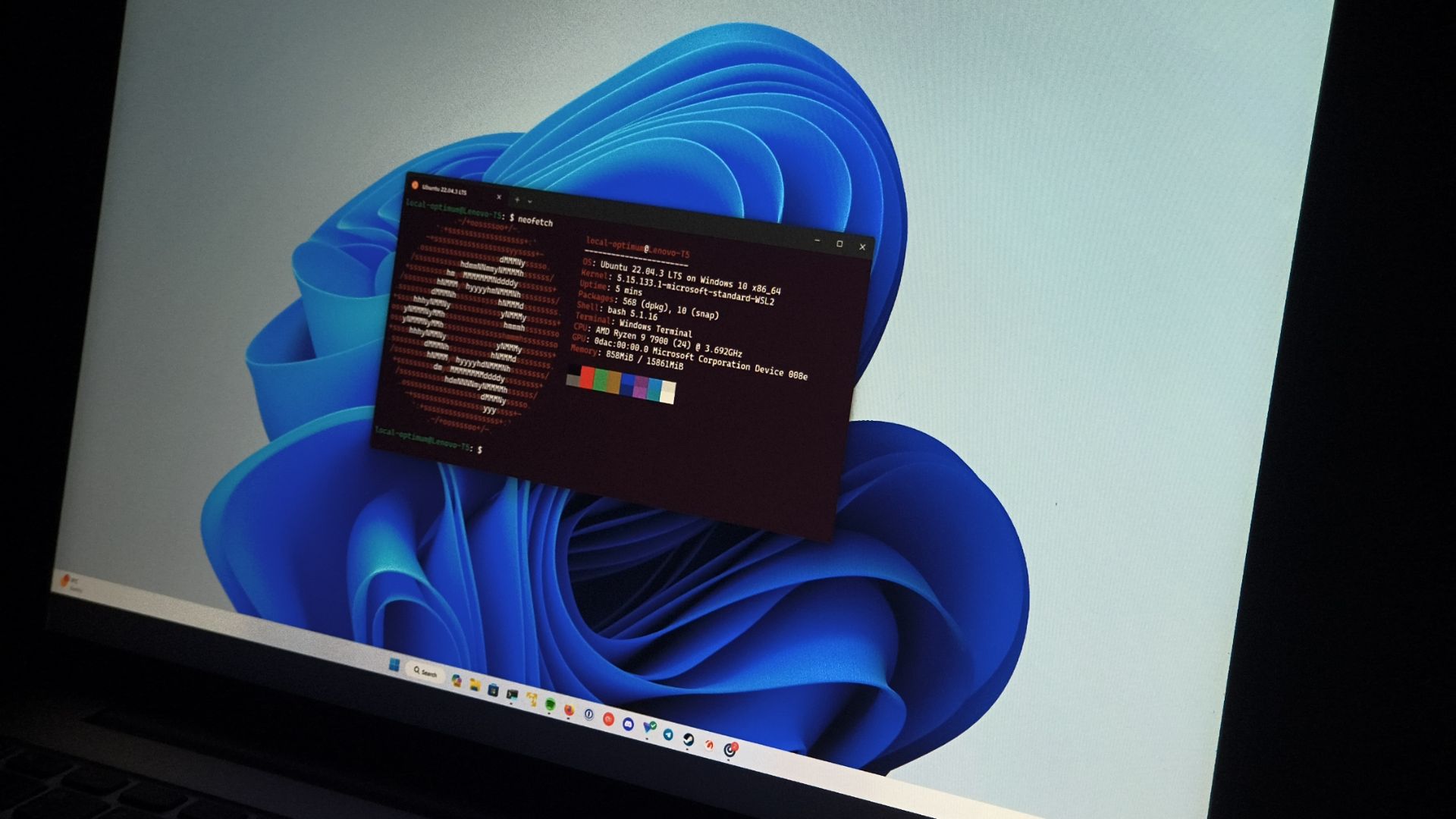
the awkwardly-written title is referring to ubuntu via WSL (“on Windows 11”) as opposed to just running linux (“native”).
the article is pretty clear what it’s about, even the caption on the first image straight up says what i just wrote. you read it instead of just reading the title, right?
A lot of negativity on using Ubuntu. I agree with the hate for Ubuntu but if i was trying ease my mom into Linux I would put her on something like this to begin with.
Ubuntu is a good starting point for people who aren’t comfortable on computers.
That was true 15 years ago. There are now plenty distributions focused towards new users. And to be fair standard distributions have become very user friendly.
I’m a Fedora user myself. It’s pretty well built but I’ve had a lot of issues especially with the Wayland stuff. That’s getting better for sure but Ubuntu has the type of tech support that older people are used to.
It’s probably still the most popular distro, still today, which means there are going to be more resources for them.
If my mom has to open the terminal, she’s going to give up and go back to windows.
I installed Fedora on my mother’s laptop because she was complaining about it being slow and loud, on top of windows occasionally breaking after updates. She’s had no problem so far and seems to be happy with it. I just set it to auto update everything every week and that’s it.
That’s because Ubuntu is the standard devops platform for intellectually challenged software engineers who don’t like choosing a quality development platform because they fear lack of documentation since Ubuntu was the distro standard for 15+ years.
Hence why its also highly used as a podman/docker image base.
And why actual linux users tend to switch or pick a superior distro.
Its just shittier Debian.
I like mint for easier access to newer packages/drovers for my gaming VM but that’s about it.
Your average new user (non gamer)isn’t going to know about window emulators so I can see why they go ubuntu when it’s supported by software such as pcoip for example.
Despite that it and any windows program can be run on any distro using free stuff like heroic if you want a fancy button
I am a Ubuntu to user now. However, I find myself reading Arch wiki far more and a bit Debian’s but barely Ubuntu’s. But I agree that Ubuntu is the industry standard and it’s acceptable to distribute a deb and test it on Ubuntu LTS and call it a day. Other distros can simply dig into it and make it work. Containers and sandboxes are great, but I hate the concept to only distribute things that way. Snap Flatpak LXC Incus Docker Podman etc. stuff don’t work on some restricted/weird environment.
Funnily enough, Microsoft built WSL so developers could use Linux without leaving Windows. Instead, it turned a growing number of Windows PCs into functional Linux development machines, with Windows serving as little more than the launcher.
I mean, I get using Windows if you’re actually doing Windows development work, but if not, I’d just put Linux proper on the thing.
The appeal for developers is that even if their employer issues a Windows laptop, and even when their development stack expects Linux, WSL removes the need to dual-boot.
With WSL, they don’t have to fight their employer’s hardware policy to get it.
Any employer that is employing someone to do Linux development work and takes issue with them having a Linux box to do dev work isn’t a place that I’d want to bother to work.
I wouldn’t work there either but those places exist and we must mourn the souls who toil there.
Functionally all new apps are “Linux development work”, as modern C# solutions are containerised and hosted on Linux servers.
Microsoft gave up on Windows servers a decade ago when they released .net Core, as it was the sound solution to ensure continual growth of Azure and fighting off Java adoption hosted through AWS/GCP
.net framework is a niche framework now, which just a few legacy platforms run today.
However the reason IT requires Mac and Windows for everyone, is because they can lock those machines down. Like mad down, they don’t want to build software to lock Linux machines down from a central place.
That just means only idiots install Ubuntu.
Or that it is just the default for WSL.
I’m sure this is VMs in corporate environments.
if you read the article instead of just the title, you’d just know it’s WSL instead of having to speculate.
Ubuntu, not Linux.
This is backwards. Running Linux within Windows is such a waste of resources and mitigates a lot of the great things about Linux. Each to their own.
Yeah, go tell that to your company’s IT department.
That’s what WSL is used for: keeping developers somewhat sane in a company that’s Windows-only.
I know plenty developers who run mostly in WSL just for the ease of having Word and such software on the same machine.
Yeah they’re squares