

- cross-posted to:
- [email protected]
- cross-posted to:
- [email protected]
Are we eating enough plastic already?
You must log in or # to comment.
Before the yeast can start feasting, the PET plastics are subjected to a process called oxidative hydrothermal dissolution to break them down into smaller bits that the microbes can digest.
Sensationalism aside, this could actually be a big deal. We use a lot of PET (polyethylene). Plastic drink bottles, plastic bags, plastic wrap, tape, fabrics, even some car parts. PET is a huge market segment of consumer products that are difficult to replace with environmentally friendly alternatives.
If we can boil it and then feed it to a vat of yeast to break down, that would be fantastic. Even better, it could remove some of the difficulty of plastic sorting which is a major part of the recycling problem. Basically, if you dump some plastic into the vat that the yeast can’t eat, well it just won’t eat it, so just sift it out of the vat later for a different disposal process, no big deal.
Even if humans can’t directly consume the byproduct, I’m sure we can use it for something else.
My biggest question is how long this takes, which they don’t address in the article. How long do you have to boil the material (how much energy, how much water, how much oxygen, how big a facility to process X volume of waste), and how long does it take the yeast to break it down? If it can be done in hours or days that’s well worth spending some resources to build a processing center. If it takes months or years it will require more planning and analysis.
My biggest question is how long this takes, which they don’t address in the article. How long do you have to boil the material (how much energy, how much water, how much oxygen, how big a facility to process X volume of waste), and how long does it take the yeast to break it down? If it can be done in hours or days that’s well worth spending some resources to build a processing center. If it takes months or years it will require more planning and analysis.
They don’t put in a direct answer, but there is an indirect one: $60 per kilo. That needs to come down A LOT before there is a real future for this. I heard of projects that try and turn plastics into fuels. Sooner or later somebody will figure it out.
Yes, I’m assuming that this is being done in a lab environment without purpose-built equipment, and also that developing the specialized yeast strain was part of the cost.
Assuming that the genetic change is stable and that the yeast is self-propagating like normal yeast, then engineering the rest of it into an assembly line shouldn’t be too difficult and should bring the cost down by orders of magnitude.
Plus, if we can turn the output hydrocarbons into a viable market product then the recycler can offset the operating cost, which would make this even more interesting. Right now plastic recycling is just losses.
should bring the cost down by orders of magnitude.
Sure is what I hope for.
Assuming that the genetic change is stable and that the yeast is self-propagating like normal yeast, then…
…we will have to stop using so much plastic, because it won’t be reliable shelf stable packaging one the yeast that eats it is loose.
Possibly, but:
Before the yeast can start feasting, the PET plastics are subjected to a process called oxidative hydrothermal dissolution to break them down into smaller bits that the microbes can digest.
“Oxidative hydrothermal dissolution” - basically they boil the plastic and oxidize it, I think at the same time. Maybe hydrogen peroxide + water? Essentially this is kind of an accelerated aging.
Anyway, the yeast can’t eat the plastic without some processing first, which is probably good because it means existing plastic packages won’t just start falling apart. On the other hand if this does get loose, it might be able to eat any PET litter that has started breaking down in the environment due to exposure to sun, rain, ocean water, etc. The absolute easiest waste for this to eat would be any PET that has broken down into microplastic particles and ended up in soil or water, which would be kind of an ideal situation.
Evolution finds a way.
But seriously I thought the article implied the oxidation process just made the particle smaller so they’d have more surface area and get consumed quicker. Even if it’s slow, won’t the yeast that have a taste for PET still want to grow on it, like they do with bread.
It really depends on the necessary conditions for the yeast to start using PET, most yeasts will just not do much unless their specific condition is met
$60 per kilo
That’s not bad for a prototype! With lab-growth meat, the initial cost was $2.3 million / kg. It’s come down since then because of process and scale improvements, but when it starts off that high, it’s going to be a while for it to become affordable.
A quick non-AI figure is $0.60 per kilo to recycle plastic… so we just need improvement by a factor of 100 which is quite realistic.
Thanks for being the only useful comment here
Introducing picoplastics to a cookie near you (hopefully not)
Aren’t they just hydrocarbons at some point?
Like burnt toast?
Burnt toast doesn’t accumulate in the body
Are we sure about that? Hasn’t charred food been added to the probable carcinogen list sort of recently?
Yeah, but it can be degraded and cleared
These “food cookies” could be used as compost or animal feed no? Just transforming it into something that can return to nature is really cool.
Also opens up the door to possibly finding a way to remove microplastics from people or animals. If it was possible to safely get those yeast into people, would break them down.
Absolutely. Nothing can break down those polymers naturally, so just getting that process started makes a big difference. The very worst case is that the output material ends up in landfill - if it’s just a sugar molecule at that point, it will break down relatively quickly. Way, way better than letting the plastic break down in the environment.
PET is one of the easiest plastics to recycle. If this was done to PS, it’d be awesome.
Maybe, but current plastic recycling methods still require significant pre-cleaning, and if the material is too contaminated it just goes to landfill. It also still has to be properly sorted, and one item of the wrong plastic type can ruin an entire recycling batch.
For this process, I think that won’t matter so much. The yeast will eat what they want and leave the rest, which can be filtered out later.
Polyethylene Terephthalate and Polyethylene are not the same.
From the sounds of it, some kind of genetic treatment to turn everyone into raccoons?
So that’s why he cut off and took the roadkill penis…
Wait I’m kinda down to be a raccoon tho
i know people that ate raccoon, i would never try it. apparently some people in my city caught wild raccon and cooked it and ate it. the meat is like pitch black.
Idk if it’s an unpopular opinion here, but I’m totally cool with bugs as protein. I actually ate a roach that was raised in a clean environment and fed nothing but apples. It wasn’t bad, actually kinda good. Tasted vaguely of apple to boot.
I’m cool with it. I fuckin hate roaches, but that aside, I think people misrepresent the concept for their own goals. The point isn’t to eat bugs for protein (even if humans have at various points in history as a cultural norm). The point is modern meat production is killing us, and we should find other ways to supplement our nutritional intake. But the same people who bitch about vegans not getting the right macros or whatever also shit on bugs, so
just eat a dang beans
Entomophagy isn’t even uncommon, globally speaking. And I can vouch for chapulines and escamoles being tasty. I’d happily try more invertebrate foods.
Hakuna matata
First it was bugs as protein .
Which has nothing wrong…?
Then it was poo burgers .
I mean, i really doubt it’s meant to be taken as serious consideration and not just “why don’t wr just try for the funnies?”
Now it’s trash cookies.
Seems like you did not even try to understand the article lmao, they just want to showcase their modified yeast that can “eat” PET and produce other stuff with it
I was trying to be funny though.
I was gonna say piss beer, but we already have heineken.
(Boomer joke I know, I know!
Tbh I drink almost no more alcohol in general)
😂😂😂 Heineken is so bad, i think I’d rather drink piss.
Wait they haven’t even tasted it? If I was a scientist turning plastic into food I would be at least licking it.
Probably concerned about worst case scenarios. This is a bioengineered yeast that eats PET. What if it populates your gut and fucks up your gut fauna and hurts you?
What if you shit it out and it gets into some waste area with lots of plastic and starts multiplying uncontrollably?
What if it evolved to eat other plastic and now all our current plastic starts literally molding?
There’s a lot of weird shit that you can be concerned about. Might be low risk but low risk of extreme new scenario.
Ice-9 but for plastic!
Niche reference but I’m here for it
Or like Ritonavir
Very cool!
Widespread contamination with such microscopic seed crystals may lead to the impression that the original polymorph has “disappeared”. In a few cases, such as progesterone and paroxetine hydrochloride, the disappearance gradually spread across the world, and it is suspected that it is because Earth’s atmosphere has over time become permeated with tiny seed crystals. It is believed that seeds as small as a few million molecules (about 10^−15 grams) are sufficient for converting one morph to another, making unwanted disappearance of morphs particularly difficult to prevent.
Remarkable. Actual sci-fi grade stuff.
What if it evolved to eat other plastic and now all our current plastic starts literally molding?
Side plot point in Niven’s Ringworld/Protector series, only with superconductors.
And also in The Andromeda Strain.
Sounds great! The world will recover, without the scourge of plastics!
Those are mental images that I didn’t want
Can’t be any worse than fast food!
Yeah, unintended consequences can be devastating.
Acceptable damage.
It’s possible they did taste it but can’t say it because they didn’t get permissions to do it.
Bingo. They 100% ate it, but the university lawyers don’t want to be liable for poisoning a bunch of grad students.
So everyone’s going to pretend the students didn’t eat the plastic cookies.
Get NileBlue on the case!
This is basically the plot of the the body horror movie “Crimes of the Future” where humans modify themselves to be able to eat the “new food” that is readily available, plastic waste. It is not meant to be hopeful.
I thought that was about a subset of people who had mutated to digest plastic, not that they modified themselves to do so.
The whole opening scene has a small child too young for surgery, just going ham on his trash can.
I didn’t want to give away everything but yes, the other plastic eaters had modified themselves and somehow a surgical modification changed a live birth to be able to be the first human to be able to eat plastic. Hence the kid.
This should be the diet of oil oligarchs and politicians who continue to suppress efforts to reduce fossil fuel use
It’ll end up being the diet of everyone but them.
Has anyone read Diamond Age? I’d suggest you give it a try, even with the weird Stephenson jumps near the end, it explores molecular level production of products, including food.
I feel this work is a huge deal for NASA and other space flight tech dev. Instead of trying to pack a ship with cookies, pack it with plastic and convert as needed.
It is a wonderful stealth sequel to Snow Crash as well. Good callout!
Oh hell yeah, I loved that book. Now I just ordered Diamond Age! yeehaw new book day!
I did say stealth sequel, so be wary.
Same author, great story, very different book. I’m sure you will still enjoy the read though.
I do remember it is an awesome book, but it’s been probably 20 years since I read it
While this could be good, I think about this much older article that talks about somewhat similar things, specifically
turkey offal, tires, plastic bottles, harbor-dredged muck, old computers, municipal garbage, cornstalks, paper-pulp effluent, infectious medical waste, oil-refinery residues, even biological weapons such as anthrax spores
but they ended up only doing (what I remember being) the turkey offal. The article mentioned here says
plastic compounds and agricultural byproducts like discarded plant stalks into proteins, fats, acids, and flavorings
and while it has been 20+ years, my concern is that it will end up doing much less than promised. But I can hope for more.
“We produce 400 million tons a year of plastic waste. You’re not going to turn it all into cookies.”
That’s quitter talk. Have you seen the shit Americans eat? We could do 400 million tons of cookies and a large diet coke without flinching.
Fuck micro plastics, we got macro plastics
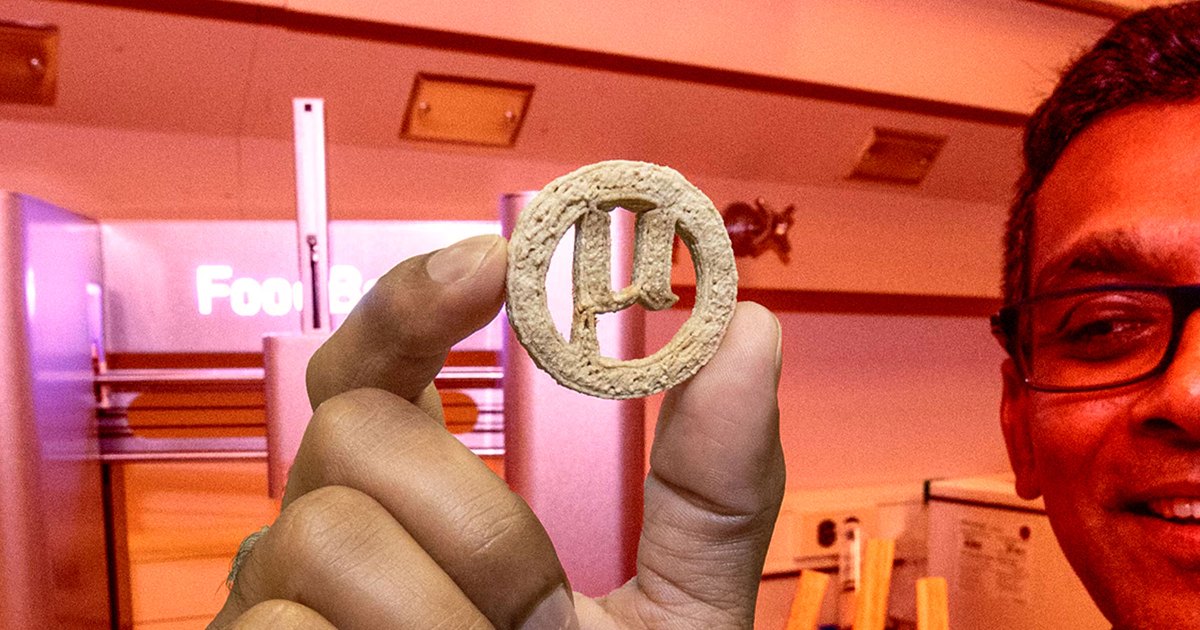
They haven’t actually eaten one of their µBites yet
oh, microbites. microbe-bites
Wait… that’s could have been a NileRed video!
there was a study during WW2 germany whether factories could produce synthetic food from petroleum … i’m not entirely sure what the outcome of this was, actually, i should read up on it some day.
“They [university students] haven’t actually eaten one of their µBites yet, as they wait for university approval.”
LOL yeah right - same reason I never drank beer in college. Waiting for approval!
They haven’t capitalized on feeding us our own shit… until now!
Ask your doctor if Plastic is right for you.