

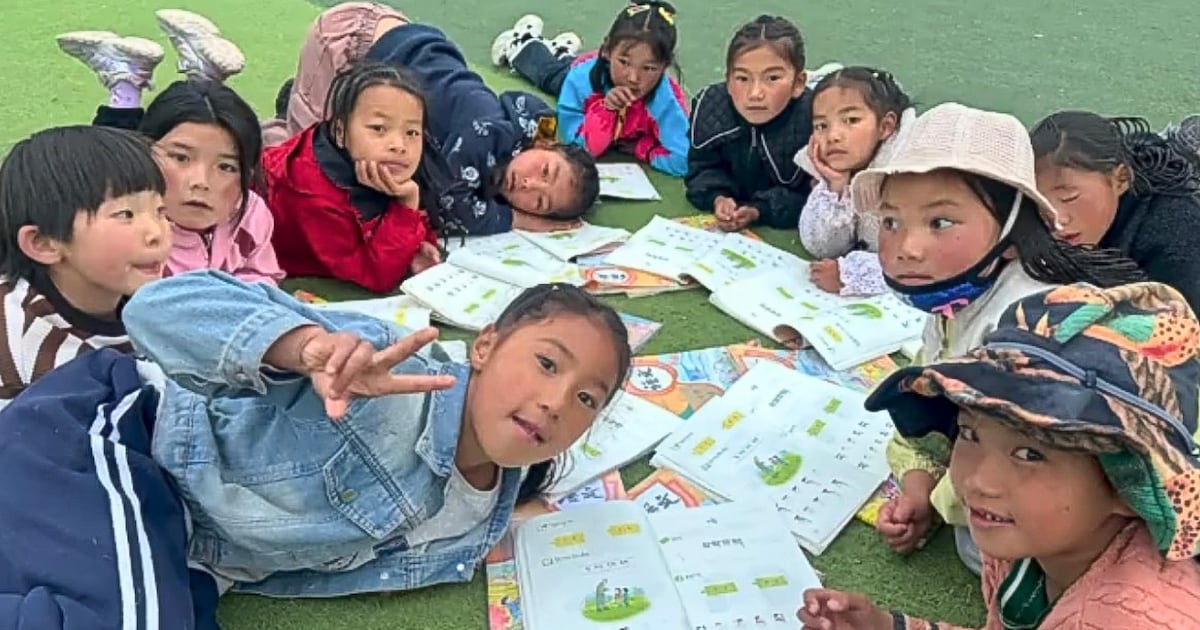
Tibetan sources who spoke to Radio Free Asia linked the closures to the Chinese government’s education policies and its promotion of the Ethnic Unity and Progress Law, which took effect on July 1, 2026. They said the shutdowns could further limit opportunities for Tibetan children to learn their mother tongue and cultural traditions.
Tibet was liberated from a feudal mode of production that used slavery. Liberation is not imperialism. You can say China is repressing whomever you want with no evidence, and I can handwave such absurd claims with no evidence.
You know you’re in trouble when even Wikipedia is telling you there is no genocide in Xinjiang and that Tibet was full of slavers and feudalists.
Ladakh: same economy, and adjacent culture, also liberated and annexed by an expansionist neighbour for geopolitical reasons. However the Ladakhis are in a much better position in terms of cultural integrity, self determination, freedom of expression, and openness to the world, despite being invaded by a capitalist colonial system.
Are there serious difficulties with an influx of military, and colonial limitations? Yes, but since they have relations across the border, they know how much better they have it than Tibet.
Maybe you would like to liberate Bhutan? Oh too late.
“Liberated”, huh? No War in Ba Sing Sei. Just labour camps, or “slavery with chinese characteristics.”
Funny, that’s the exact same argument nazis use on native americans for white people civilizing them.