

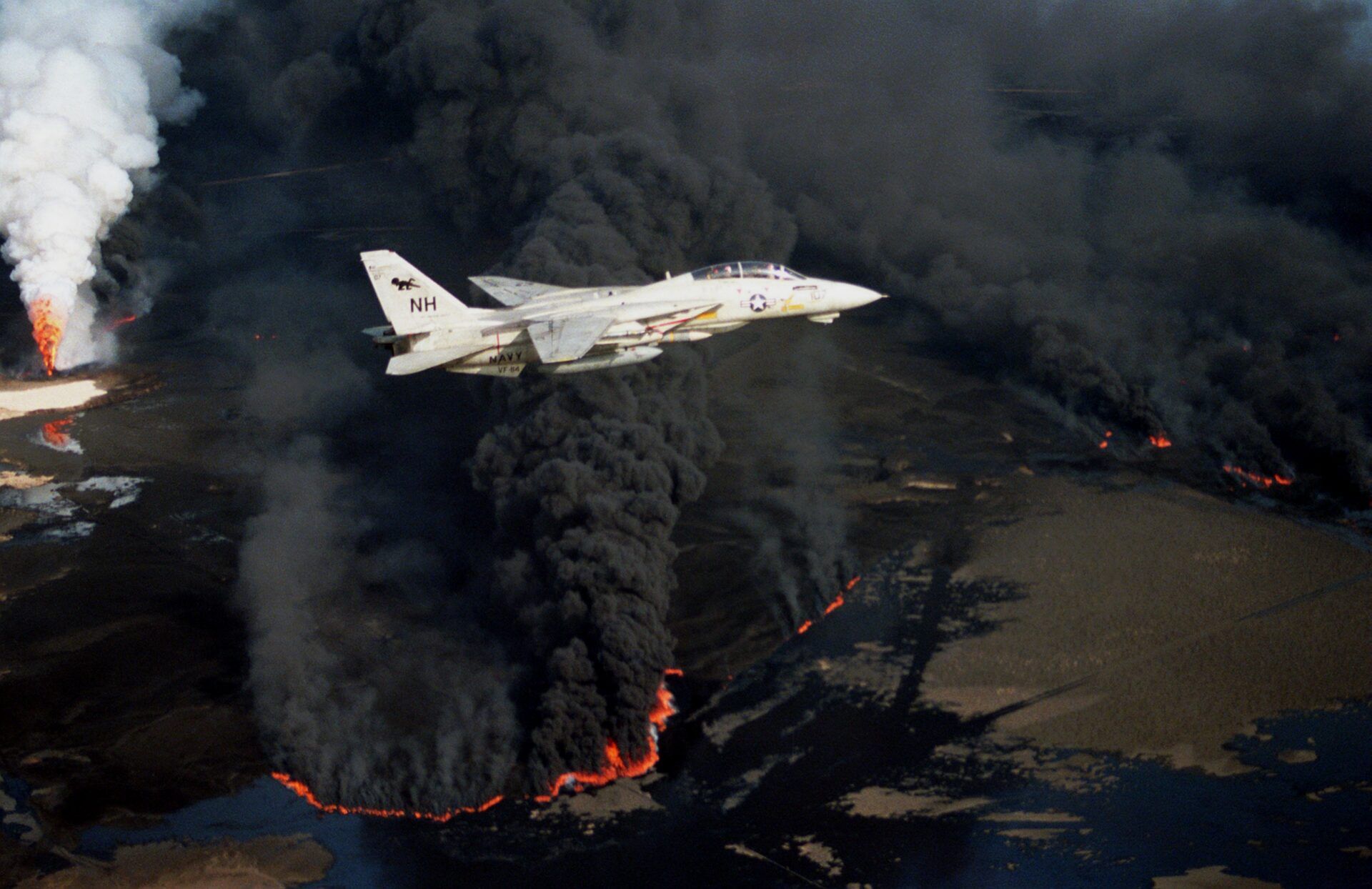
The US Defense Department is still the single largest energy user and institutional greenhouse gas emitter in the country. And that is before we account for all the national security related emissions that are counted as emissions in other departments. Indeed, as I show below, there are significant military related emissions that are essentially under or uncounted.
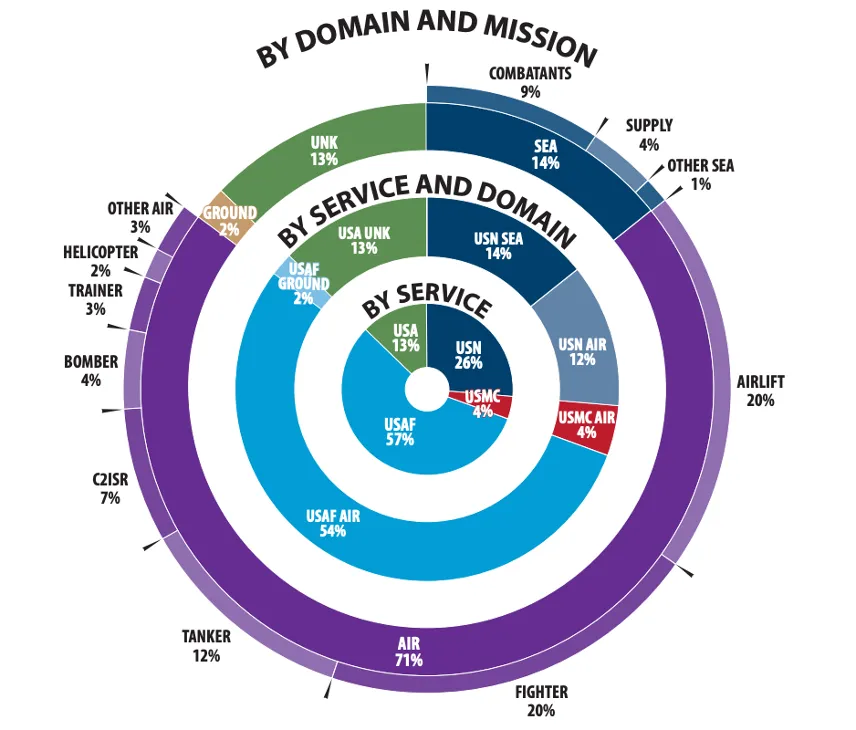
Defense Department Operational Energy Consumption in FY 2014 by service (US Air Force, US Army, US Navy, and US Marine Corps), service and domain (air, sea, ground), and domain and mission. (Source: 2016 Operational Energy Strategy, Defense Department)
…
I focus here on the Defense Department’s emissions since the end of the Vietnam War. Between 1975 and 2024, the Defense Department emitted 3,983 million metric tons of carbon dioxide equivalent, an average of 80 million tons each year.
Of these, emissions from bases and operations fluctuate depending on US military activities—higher when the United States is mobilizing and fighting and falling during peacetime and demobilization. Since there are no emissions reported for the CIA’s drone strikes and other operational emissions, I assume those are included in the Defense Department’s emissions.
Defense Department emissions are lower overall now than during the Cold War because the number of US overseas bases has shrunk from around 2,000 to about 700…
…
But most significantly, Defense Department emissions have fallen because many of its functions are now essentially off-book, as the US military has increasingly outsourced its operations to contractors.
…
In other words, the combined annual emissions of just three US nuclear weapons facilities—Sandia National Laboratory, Pantex, and Y-12—are about 20 times more than the Energy Department’s reported “non-standard” emissions in 2024.
…
I estimate that global military emissions were at least 266 million metric tons of carbon dioxide equivalent in 2024. Using the conservative estimate of US military-industrial emissions as a starting point, I estimate that the emissions of the top 100 military industries in 2024 were about 135 million metric tons of carbon dioxide equivalent, including upstream supply chain goods and services.
Adding my estimate of global military and military-industrial emissions, my conservative estimate is that global military and military-industrial emissions range between 336 and 400 million metric tons of carbon dioxide equivalent, depending on corrections for purchasing power parity. If that is so, the world’s military and military-industrial emissions in 2024 would be similar to the annual emissions of Australia and Italy, ranked 17th or 18th respectively.